Insulation Company in Corona, CA
Blown in insulation is the most common call we get from Corona homeowners, and for good reason. The city’s older single-story tract homes near downtown often carry R-11 to R-19 original insulation that’s settled to a fraction of its rated value, while the heat that builds in attics above newer two-story subdivisions off the 15 and 91 makes every under-insulated ceiling a liability on your July electric bill. We work across all three primary insulation methods – attic batts, spray foam, and blown-in – but for most Corona homes, blown-in fiberglass or cellulose is the fastest, cleanest fix to restore a thermal barrier. Call (855) 341-6045 and we’ll tell you honestly which method makes sense for your roof pitch, your attic access, and your budget.
Why Corona Homes Are Different
Corona sits in the semi-arid Inland Empire where summer afternoons regularly push past 100°F and winter nights dip into the 40s. That swing means attic insulation here isn’t just about comfort – it’s about stopping radiant heat from baking the top of your house every afternoon and then letting conditioned air escape after sunset. The low humidity and intense sun also age insulation faster, especially along west-facing roof decks that catch the worst of the afternoon heat. We routinely see fiberglass batts that look fine from the living room but have compressed to less than half their original loft above the ceiling.
Housing stock compounds the problem. In the neighborhoods between Main Street and the 15 – the 1950s and 1960s tracts with low-pitch roofs and tight attic access – we often find original rock wool or vermiculite that’s settled to R-7 or less. Many of those attics have minimal clearance, which means the crew has to work with low-profile equipment and feed hoses through narrow scuttle openings without disturbing the roof structure. Up in the southern and eastern hills, the 1980s to 2000s two-story homes with steep-pitch concrete tile roofs have different issues: open attic spaces that are easy to access but large enough that heat gain through the roof deck is the dominant load. Each Corona neighborhood needs a slightly different approach, and that’s where material selection matters.
Permit reality in Corona is straightforward for most insulation work – retrofit attic insulation doesn’t require a building permit in the city of Corona, but if you’re in an HOA-governed hillside community, your CC&Rs may have rules about visible changes to vents or roof penetrations. We’ve worked those hills enough to know what gets flagged.
Our Main Corona Services
Most Corona homeowners call us about one of two things: insulation that’s missing or failed in an existing attic, or a desire to seal and insulate the building envelope properly during a renovation. Both have dedicated pages, but here’s the quick version of how each works in Corona specifically.
Attic Insulation in Corona
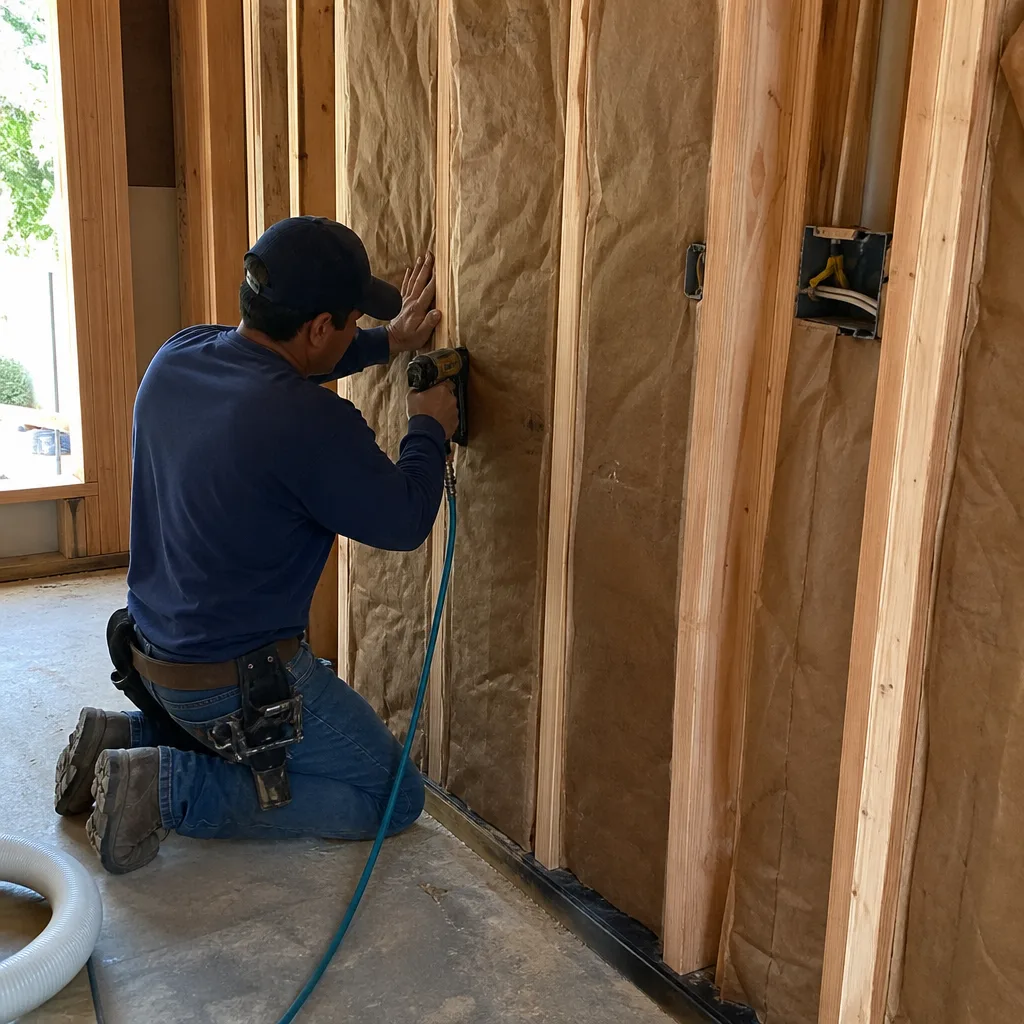
Attic insulation covers the full range of batt and roll work – fiberglass from Owens Corning and Johns Manville, mineral wool from Rockwool, and the accessories that make an attic job last. In Corona, we spend a lot of time on older low-pitch roofs where batts have to be cut and fitted around odd framing details, and on newer tile-roof homes where the attic is open but the ceiling below gets brutally hot by 3 p.m. We check ventilation first, because adding insulation to a poorly vented attic just traps heat and cooks the roof deck. Read more about how we approach attic work in Corona on our Attic Insulation in Corona page.
Spray Foam Insulation in Corona
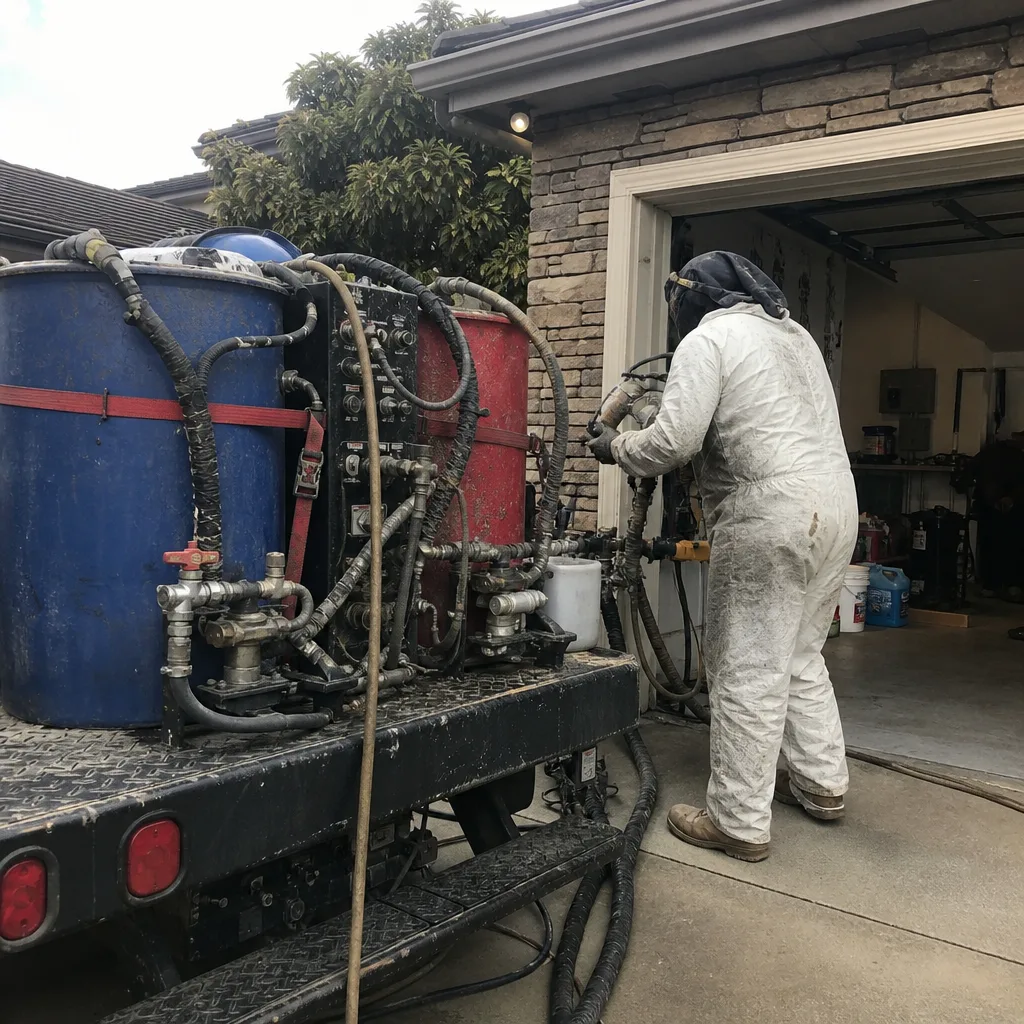
Spray foam is the right call for Corona homes where the attic is conditioned space, where ductwork runs through the attic and is bleeding cooled air, or where the homeowner wants air sealing and insulation in one pass. We install both open-cell and closed-cell foam, drawing from Icynene and Demilec lines so we can match the foam to the job – open-cell for attics that need breathability, closed-cell for roof decks and areas where moisture resistance matters. In Corona’s older homes with limited attic clearance, foam can also reach places batts physically can’t. Full details are on our Spray Foam Insulation in Corona page.
What happens when you call
- 1
A real person answersNo phone trees — you reach a local pro.
- 2
You get an upfront price rangeHonest numbers before anyone is dispatched.
- 3
A background-checked tech heads outLicensed & insured, dispatched right away.
- 4
You approve before work beginsNothing starts until you say go.
Blown In Insulation in Corona
Blown in insulation is the workhorse solution for Corona attics because it fills irregular cavities, covers existing settled insulation, and reaches areas batts can’t – all without tearing out the ceiling below. In the older neighborhoods near downtown Corona, we regularly find attics with R-7 to R-11 worth of original material where blown-in fiberglass or cellulose should be added on top to get back to current code levels. And in the newer two-story tracts, blown-in insulation is the fastest way to correct compressed fiberglass that was installed two decades ago and has lost most of its rated R-value. We carry both fiberglass and GreenFiber cellulose for blown-in work – the choice depends on your attic depth, your access, and how much you care about recycled content in the material. Learn more about the method on our Blown In Insulation page.
Cellulose Insulation
Signs you need it
Your existing attic insulation is thin, dusty, or compressed in patches, and you want a recycled-content material that fills gaps better than batts.
What it costs in Corona
Cellulose blown-in insulation in Corona typically runs $1.25 to $2.25 per square foot installed, depending on depth and whether we’re topping off existing material or starting fresh.
How we do it
We air-seal penetrations at the attic floor, set depth markers, then blow GreenFiber cellulose to the target R-value with a high-output machine, fluffing it evenly across the entire attic floor without blocking soffit vents.
Blown In Attic Insulation
Signs you need it
Rooms heat unevenly across the day, your upstairs runs hot in summer, or you can see the tops of ceiling joists above your existing insulation.
What it costs in Corona
Blown-in attic insulation in Corona generally costs $1.20 to $2.00 per square foot installed, depending on material choice and the R-value you’re targeting.
How we do it
We locate and seal bypasses like plumbing chases and recessed can penetrations, check that attic ventilation is balanced, then blow insulation to the specified depth using fiberglass or cellulose, verifying the final R-value with depth checks.
Loose Fill Insulation
Signs you need it
Your attic has awkward framing, low-clearance corners, or existing insulation with bare spots and gaps that batts can’t realistically cover.
What it costs in Corona
Loose fill insulation in Corona runs $1.20 to $2.00 per square foot installed, with final pricing driven by depth, attic access difficulty, and the material you select.
How we do it
We run the hopper and hose through the tightest access point without disturbing the roof structure, keeping the hose low to avoid kicking up dust, and distribute loose fill in a single even pass so you get uniform R-value across the whole attic.
What Blown In Insulation Costs in Corona
| Item | Typical range in Corona |
|---|---|
| Blown-in attic insulation | $1.20 – $2.00 per sq ft |
| Cellulose blown-in insulation | $1.25 – $2.25 per sq ft |
| Loose fill insulation | $1.20 – $2.00 per sq ft |
Corona’s oldest homes push these numbers higher when attics have minimal clearance, because the crew works slower and uses low-profile equipment that leaves no room for shortcuts. We quote the full price before we start, and that price doesn’t change unless you change the scope.
Does blown in insulation settle over time in Corona?
Yes. Fiberglass loose fill settles more in low-humidity Corona attics than cellulose, which holds its depth better once installed. We compensate by blowing slightly above the target depth so you get the rated R-value even after the first year.
Can you blow insulation over old material in a Corona attic?
In most cases you can blow new material directly over existing insulation, as long as the old material is dry and not moldy. We check for moisture and vermiculite first – in older downtown Corona homes, vermiculite needs testing before anything gets covered.
Brands We Service in Corona
We’re not tied to one manufacturer, which means a Corona recommendation is based on your attic, not our inventory. We work with Owens Corning and Johns Manville fiberglass, Rockwool mineral wool for fire-resistant and sound-dampening needs, Icynene and Demilec spray foam, and GreenFiber cellulose for recycled-content jobs. Common materials are stocked locally for most Corona projects, and special-order items typically arrive within a few days. See the full roster on our brands page.
Pricing for Insulation Company in Corona, CA
| Service | Typical range in Corona |
|---|---|
| Attic insulation (batts/rolls) | $1.50 – $3.50 per sq ft |
| Blown-in attic insulation | $1.20 – $2.00 per sq ft |
| Blown-in cellulose insulation | $1.25 – $2.25 per sq ft |
| Blown-in fiberglass insulation | $1.20 – $2.00 per sq ft |
| Loose fill insulation | $1.20 – $2.00 per sq ft |
| Cellulose insulation | $1.25 – $2.25 per sq ft |
| Open-cell spray foam | $2.00 – $4.50 per sq ft |
| Closed-cell spray foam | $3.50 – $7.50 per sq ft |
| Spray foam attic insulation | $3.50 – $8.50 per sq ft |
| Spray foam roof deck insulation | $4.00 – $9.00 per sq ft |
| Attic insulation removal | $2.00 – $4.00 per sq ft |
| Insulation removal and replacement | $2.00 – $4.00 per sq ft |
Prices push toward the high end in Corona when attics have tight access from low-pitch roofs, when existing material has to be removed first, or when a hillside home’s roofline makes staging more complicated. Every quote is itemized and final – we don’t pad the number after the fact.
Neighborhoods We Serve in Corona
We work the full span of Corona, from the older single-story tracts around downtown to the newer subdivisions climbing the southern and eastern hills. Most of our crews can reach any Corona neighborhood the same day or next business day for an estimate, and emergency calls through the week typically get same-week scheduling.
- Downtown Corona and the 1950s-1970s tracts near Main Street
- Sierra del Oro and the neighborhoods along Green River Road
- Eagle Glen and the hillside subdivisions off the 15
- South Corona tracts around Dos Lagos
- Eastvale-adjacent communities near the 15 and Limonite Avenue
Service Area – Cities Near Corona
Maple Insulation Co serves Corona and the surrounding Inland Empire communities, including Home Gardens, CA, El Cerrito Corona, CA, Eastvale, CA, and Norco, CA. If you’re just outside Corona city limits, call us – our crews run these roads daily and can usually match Corona scheduling.
Serving Corona, CA — Our Local Coverage Area
We’re based in the Corona area and know this community well. Use the map below to see our service coverage — if you’re nearby, we can almost certainly help.
FAQs About Insulation Company in Corona
Most Corona estimates are scheduled within one to two business days, and same-day visits are common when we already have a crew in the area. We work the full Corona footprint from 92877 through 92880, so no neighborhood is out of range.
Retrofit attic insulation in Corona does not require a building permit, but if you’re in an HOA-governed hillside community, check your CC&Rs before any work that changes visible roof vents or attic access points. We can advise on what your specific neighborhood typically requires.
Yes, but the sequencing matters. We identify knob-and-tube-era wiring before any blown-in work begins, because insulation cannot be installed directly over active knob-and-tube circuits. We’ll coordinate with your electrician to get the attic ready, then complete the insulation properly.
If your Corona home is running hot upstairs, losing cool air through the ceiling, or showing signs of settled attic insulation, call (855) 341-6045. We’ll walk the attic with you, measure what’s there, and give you a straight answer on what it’ll take – and what it’ll cost – before any work starts.
What happens when you call
- 1A real person answersNo phone trees — talk to a local insulation pro.
- 2You get an upfront price rangeHonest numbers before anyone is dispatched. No surprises.
- 3A background-checked tech heads outLicensed & insured, typically within the hour.
- 4You approve before work beginsNothing starts until you say go.
What Corona Customers Say
"Spray foam in the rim joists in the basement. The cold floors above them are gone."
— Kelly Meyer"He did a blower door test before and after and gave me the numbers. I like being able to see the difference rather than being told about it."
— Ruben Guzman"Found and sealed a gap around the chimney chase that was basically an open chimney to the attic."
— Kevin Chen