
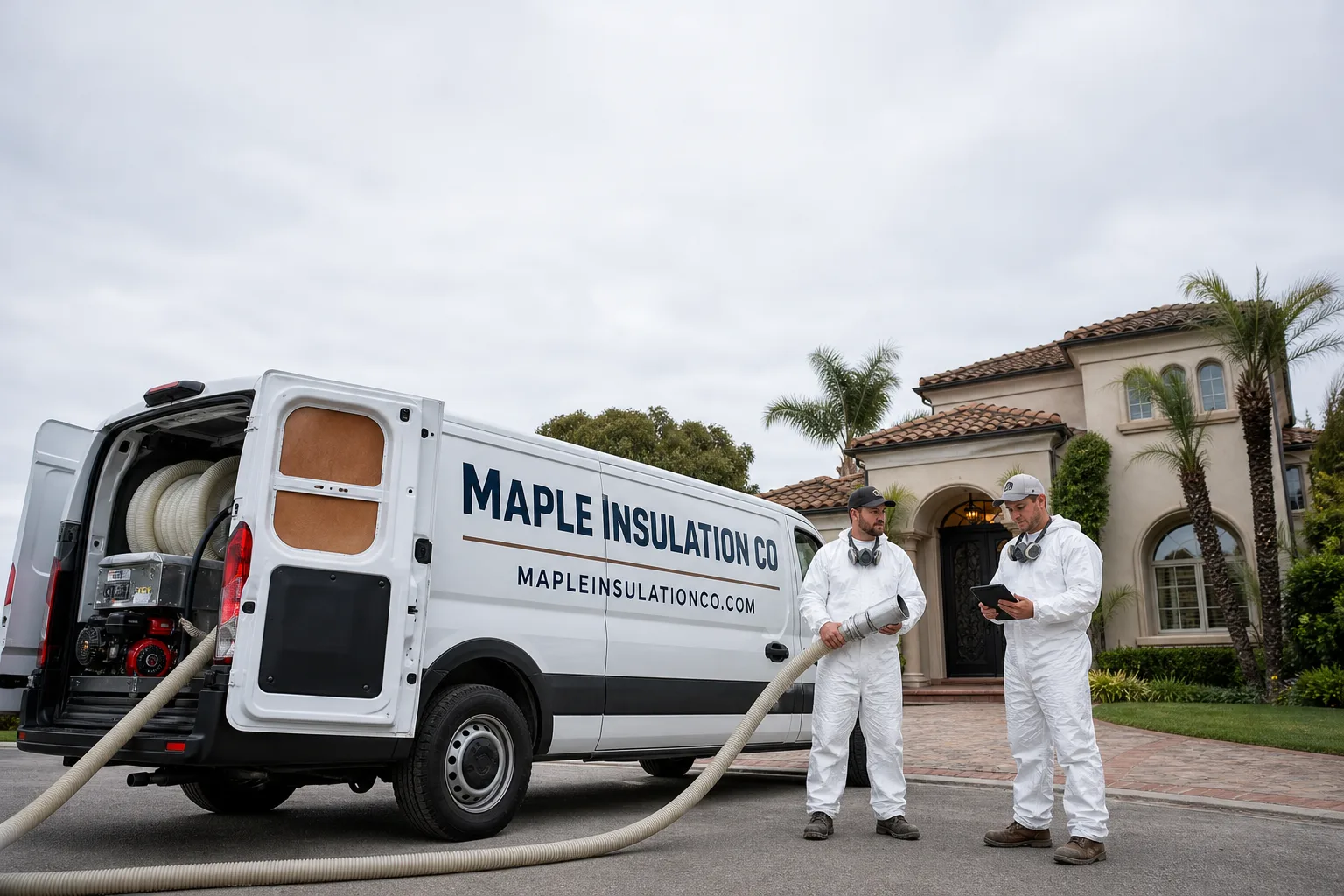
Fast, Reliable Spray Foam Insulation Across Riverside
Spray foam insulation in Riverside is the most effective way to stop the Inland Empire heat from turning your attic into an oven that drives cooling bills through the roof. We install open-cell and closed-cell foam in attics, rim joists, garage ceilings, and roof decks throughout 92503, 92504, 92505, and 92506, and our crews know exactly what Riverside’s mid-century tract homes need: air sealing and roofline foam that cut cooling load, not just added R-value. If your HVAC runs all afternoon and upstairs rooms still feel warm by 4 PM, call (855) 341-6045 for a free estimate. We respond to Riverside jobs within 48 hours in most cases.
Riverside sits east of the coastal mountains, which means summer afternoons regularly push past 100°F and attic temperatures climb even higher. That changes the entire insulation conversation. Downtown Riverside’s historic homes, the sprawling 1950s-70s tracts north of the 91, and the newer master-planned communities off the 215 all have different thermal envelopes, and the right foam choice depends on which one you live in. Our Spray Foam Insulation team has worked in every corner of the city, from the Arlington Heights bungalows to the stucco ranches around La Sierra.
Why Maple Insulation Co Is Riverside’s Preferred Spray Foam Insulation Company
Most insulation contractors push one product line. We don’t. Maple Insulation Co works across spray foam, blown-in, and attic batting, and we stock material from eight nationally recognized manufacturers, which means the recommendation you get is based on your actual attic, not our inventory. Riverside homeowners call us when they want a straight answer about whether open-cell foam makes sense over their settled blown-in, or whether they should top off the existing insulation and call it done. We give you that answer honestly.
Our crews have spent enough time in Riverside attics to know the pattern: original insulation in homes built between 1955 and 1975 has usually compacted to a thin mat, top plates leak air, and ductwork running through the attic absorbs heat all afternoon. That’s not a generic inspection finding, it’s what we see over and over in the 92503 and 92504 corridors. Noel Castaneda, who leads our Riverside work, has walked hundreds of these attics and can tell you within minutes whether roofline foam will pay for itself in cooling savings or whether a targeted air-seal-and-top-off is the better move.
We carry Icynene and Demilec spray foam lines, two of the most recognized names in high-performance building envelopes, and we also stock Rockwool mineral wool and Johns Manville fiberglass when fire resistance or budget shifts the conversation. That flexibility matters in Riverside, where a 1960s slab-on-grade stucco home needs a completely different scope than a new infill build on the city’s eastern edge.
Open Cell Spray Foam in Riverside
Open Cell Spray Foam is the workhorse of Riverside attic retrofits because it seals and insulates in one pass, and it’s priced for the aging housing stock that dominates ZIPs 92503, 92504, and 92506. We apply it to the attic roofline or attic floor depending on whether your HVAC and ductwork live inside the thermal envelope. In a Riverside summer, applying open-cell foam directly beneath the roof deck keeps the ductwork from cooking in 140°F+ attic air, which is often the single biggest lever for cutting cooling costs in an older tract home.
Typical open-cell spray foam in a Riverside single-story ranch runs $1.20 to $2.10 per board foot installed, which translates to roughly $1,800 to $3,600 for a standard 1,200 to 1,500 square foot attic with a 10 to 12 inch application. Jobs that include air sealing at top plates, can lights, and wire penetrations land at the upper end of that range because the prep work adds hours. The good news: open-cell foam also dampens sound, which matters when your neighbor’s AC condenser sits five feet from your bedroom window in a tight Riverside lot.
Attic Roofline Sealing
When we spray open-cell foam to the underside of the roof deck, we’re moving the thermal boundary from the attic floor to the roofline. That puts your ductwork and any storage inside the conditioned space. For Riverside homes where the ducts run through the attic, this approach is often the most effective way to stop heat gain before it reaches the air handler.
Top Plate and Penetration Sealing
Before any foam goes down, we seal top plates, plumbing vents, and electrical penetrations. In Riverside, Santa Ana winds push hot dry air through these gaps, and foam applied without sealing them first just traps that airflow behind the insulation. Our crews treat air sealing as a separate line item, not an afterthought.
Spray Foam Insulation Contractors in Riverside
Spray Foam Insulation Contractors in Riverside should be able to explain why foam beats blown-in for your specific attic, not just hand you a one-size-fits-all quote. Our team does exactly that. We look at your attic deck temperature, your duct layout, and whether your original insulation has settled to the point where adding more on top would trap heat rather than block it. That distinction matters more in Riverside than in coastal cities, because our problem is heat gain, not heat loss.
We handle every step in-house with our own trained crews: removal of compromised insulation when needed, air sealing, foam application, and a final thermal inspection. No subcontractors, no coordinating three different companies. A typical open-cell roofline foam job in Riverside takes one to two days from prep to cure, depending on attic size and access. Closed-cell jobs run longer because the material cures in thinner passes and costs more, typically $2.40 to $3.60 per board foot installed.
Air Sealing Before Foam
Riverside’s seasonal winds and 30-degree day-night temperature swings make air sealing the foundation of every foam job we do. We locate gaps at top plates, recessed light housings, and chase ways, then seal them before foam application. Skipping this step is the most common reason a Riverside foam job underperforms.
HVAC and Ductwork Coordination
Because so many Riverside homes run their ductwork through unconditioned attics, we coordinate foam scope with your existing HVAC layout. If the air handler sits in the attic, roofline foam usually makes more sense. If the system is in a closet with short duct runs, attic floor foam may be enough. We walk you through that decision before you commit to anything.
Trusted Brands We Service in Riverside
We don’t lock you into a single foam manufacturer. For Riverside jobs we carry Icynene and Demilec open-cell and closed-cell products, and we also work with Johns Manville and CertainTeed when the scope calls for a hybrid approach. Having multiple brands in the material mix means we can match R-value, moisture resistance, and budget to your specific attic rather than forcing a product that doesn’t fit. We keep a local material inventory staged for Riverside projects, which means shorter lead times on common foam kits and no week-long waits for resupply when a job runs longer than expected.
Common Spray Foam Insulation Problems We See in Riverside Homes
- Settled original insulation under new foam. In 1950s-70s Riverside tracts, the original blown-in insulation has often compacted to a fraction of its rated R-value. Applying foam directly over it without removal or top-off traps heat against the attic floor and undercuts the whole point of the upgrade.
- Santa Ana wind air bypass. We find top plates and penetrations leaking hot dry air behind existing insulation in nearly every pre-1980 Riverside home we inspect. Foam sprayed without sealing these paths first won’t deliver the cooling-load reduction homeowners expect.
- Foam applied to moisture-laden attic decking. In older slab-on-grade homes where attic ventilation was never corrected, closed-cell foam applied too thick over damp decking can trap moisture and cause adhesion failure. We check substrate condition before spraying, every time.
- HVAC short-cycling from attic heat soak. Riverside homeowners often tell us their AC runs constantly on summer afternoons yet never reaches the thermostat setpoint. That’s usually ductwork absorbing 140°F attic heat, and roofline foam is the fix, not another AC service call.
Pricing for Spray Foam Insulation in Riverside, CA
Open-cell spray foam in Riverside typically ranges from $1.20 to $2.10 per board foot installed. A standard 1,200 to 1,500 square foot mid-century attic with roofline application lands between $1,800 and $3,600, including air sealing. Closed-cell foam runs $2.40 to $3.60 per board foot and is usually specified for rim joists, garage ceilings, and roof decks where moisture resistance or higher R-value per inch is required. Removal of old compacted insulation adds $1 to $2 per square foot, and it’s not optional in many older Riverside homes where the original material has settled into a dense mat. Call (855) 341-6045 and we’ll give you a firm scope and price for your specific attic, not a ballpark that shifts after the first inspection.
We Also Serve Cities Near Riverside
Our crews work throughout the Inland Empire. If you’re in Rubidoux, Glen Avon, Pedley, or Sunnyslope, we’re already working in your neighborhood and can schedule a Riverside service visit on the same route. Many of these communities share Riverside’s mid-century housing stock and attic heat problems, and the same scoping approach applies.
Serving Riverside, CA — Our Local Coverage Area
We’re based in the Riverside area and know this community well. Use the map below to see our service coverage — if you’re nearby, we can almost certainly help.
FAQs About Spray Foam Insulation in Riverside
Spray foam stops both heat conduction and air movement, while blown-in only slows conduction. A 1960s Riverside tract home loses most of its cooling through air leaks at top plates and penetrations, not through the insulation itself. Sealing those leaks and applying foam to the roofline addresses the actual failure mode, where topping off blown-in just adds R-value on top of the same leaky envelope. Call (855) 341-6045 and we’ll tell you which approach fits your attic after an inspection.
No, not effectively. In 92504 homes built before 1980, the original blown-in insulation has usually compacted to a fraction of its rated R-value. Spraying foam over it traps heat against the attic floor and can create a moisture sandwich. We recommend removing or properly topping off the settled material first, then air sealing, then foam application.
Yes, and this is one of the strongest cases for foam in Riverside specifically. Santa Ana winds push hot, dry air through top plates, can light gaps, and wire penetrations. Foam applied to the roofline or attic floor seals those leak paths, which blown-in insulation cannot do. The result is fewer hot drafts and a measurable drop in afternoon cooling load.
Often yes. Short-cycling in Riverside summer afternoons is frequently caused by ductwork absorbing heat from a 140°F attic. Applying open-cell foam to the roofline brings the ducts into the conditioned space, so the air moving through them is no warmer than the air in your living room. We’ve seen this fix reduce run times enough that homeowners stop noticing the cycling entirely. Call (855) 341-6045 for a assessment.
Older tract homes in 92503, 92504, and 92506 usually need air sealing, settled insulation removal, and roofline foam, which pushes quotes toward the upper end of the ranges we list. Newer infill and 92508-area builds often need only rim joist foam and a modest attic top-off, which lands lower. Your quote reflects the actual condition of the attic, not a generic per-square-foot multiplier.
Written by Noel Castaneda, Owner at Maple Insulation Co, serving Riverside since our first Inland Empire retrofit.