Emergency Attic Insulation Near Me: What Coto De Caza Homeowners Should Do First
If your upstairs is suddenly unbearable at 10pm and you’re searching “emergency attic insulation near me,” the first thing to know is this: most attic insulation problems in Coto De Caza are not true same-night emergencies. What they are is a symptom, and the symptom usually points to either an air sealing breach, an HVAC problem, or actual insulation failure. Before you call the first contractor who answers the phone, take twenty minutes to figure out which one you’re dealing with. It’ll save you from paying for insulation work that doesn’t fix the real problem. If you’d rather skip the detective work, call (855) 341-6045 and we’ll walk through it with you.
The worst time to choose an insulation contractor is during a panic search because your upstairs is suddenly 85 degrees at night. Here’s what to do in the first 24 hours that doesn’t lock you into a bad decision.
Step 1: Rule Out the HVAC First – It’s Free to Check
In our experience working throughout Coto De Caza, we’d estimate that a solid third of “attic insulation emergencies” turn out to be HVAC issues. The homeowner feels heat pouring into the upstairs, assumes the insulation gave up, and starts calling insulation contractors. But the attic insulation didn’t change overnight. Your AC system might have.
Before you spend a dollar on insulation, do these things in order:
- Check the obvious: is the thermostat set correctly, is the system actually running, is the outdoor condenser unit spinning?
- Replace your HVAC filter. A clogged filter strangles airflow, and the symptom that shows up first is exactly this: upstairs rooms that won’t cool no matter how long the system runs. In Coto De Caza’s summer heat, filters clog fast. We’ve seen filters so packed with dust and pet hair they looked like felt.
- Put your hand over a supply vent in the problem room. Is air moving? Weak airflow on the second floor with strong airflow downstairs often points to a ductwork problem, not insulation.
- Check which room faces the afternoon sun. Coto De Caza sits in a canyon-and-ridge topography where western-facing rooms routinely run 8 to 12 degrees hotter than the rest of the house. That’s a solar gain problem, and while attic insulation helps, it won’t eliminate it alone.
If the AC checks out, then you’re looking at what’s happening above the ceiling. That’s where the real diagnosis begins.
Step 2: Identify the Three Real Culprits – Insulation, Air Sealing, or Moisture
Here’s what most “emergency attic insulation” searches miss: there are three completely different problems that produce similar symptoms in a Coto De Caza home, and each has a different fix.
The insulation has actually failed or is inadequate. In older Coto De Caza homes, we frequently find original fiberglass batts that have settled, compressed, or been disturbed by pest activity or past remodeling. In some neighborhoods, homes built decades ago went in with as little as R-19 in the attic, well below what current recommendations call for in Southern California’s climate zone. When insulation compresses or gets matted down, it loses R-value. The ceiling below starts radiating heat into the living space. We pulled batts out of an attic near the Coto De Caza Golf and Racquet Club a few years back that had compressed to about half their original thickness. The homeowner had been chasing the problem with bigger AC units for years. Two new units. Still hot upstairs. The fix was the insulation, not the equipment.
Air sealing has failed, not insulation. This is the one competitors rarely mention. Heat moves into a home two ways: by conduction (through materials) and by convection (through air movement). Insulation stops conduction. It does next to nothing for convection. If your attic has gaps around recessed lights, plumbing penetrations, attic access hatches, or where interior walls meet the ceiling, hot attic air gets pulled into the living space through what’s basically a chimney effect. You can pile R-80 over the top of those gaps and still feel the heat. The fix is air sealing first, insulation second. This is why rushing to blow in more insulation without addressing leaks often produces disappointing results.
Moisture is the actual problem. In Coto De Caza’s climate, attic moisture issues usually trace to bathroom exhaust fans venting into the attic instead of outside, or to roof leaks during winter rains. Wet insulation loses most of its R-value. It also creates conditions for mold and wood rot. If you’ve noticed a musty smell upstairs, staining on ceilings, or condensation on windows in the morning, the “emergency” is really a moisture event, and new insulation won’t fix it. The moisture source has to be found and corrected first.
Each of these requires a completely different response. That’s why we match the material to the problem, not to what we happen to stock most.
Step 3: The Safe 24-48 Hour Stabilization Playbook
While you’re figuring out what’s actually wrong, there are short-term moves that reduce the misery without creating new problems or locking you into a bad purchase. Here’s what we tell Coto De Caza homeowners to do in the first day or two:
Improve attic ventilation immediately. A hot attic radiates heat down into the house. If your attic has gable vents or ridge vents and they’re partially blocked by boxes, holiday decorations, or old batts, clearing them helps. The goal is air movement through the attic space. Even a temperature drop of 10 to 15 degrees in the attic translates to a noticeably cooler ceiling below. Check that soffit vents aren’t painted over or blocked by insulation. In Coto De Caza, many of the older single-family homes have soffit vents that got buried under blown-in insulation by a previous contractor. That kills the ventilation loop.
Run your HVAC fan on “on” instead of “auto” during the hottest hours. This keeps air circulating through the house and evens out the temperature difference between floors. It costs a little more in electricity, but it’s a useful diagnostic tool too. If running the fan continuously makes the upstairs tolerable, the issue is more about air movement than insulation failure.
Close blinds and curtains on south and west-facing windows during the afternoon. Radiant heat through glass is immediate, and blocking it gives the whole system, insulation included, less work to do. This is especially relevant in Coto De Caza where afternoon sun hits hillside-facing exposures hard.
Do not go up into a hot attic and start pulling insulation around if you’re not sure what you’re looking at. Attic spaces reach 130 to 150 degrees Fahrenheit in a Southern California summer afternoon. Heat exhaustion is a real risk. There are also electrical wires, sharp truss plates, and potential pest hazards up there. If you see signs of rodent activity – droppings, chewed wiring, disturbed insulation – close the hatch and call a professional. Same goes if you see water damage or black mold on the underside of the roof sheathing. Those are situations where the hazard of being in the space outweighs the benefit of DIY investigation.
Step 4: Document Before You Call Anyone
The single best thing you can do in an “emergency attic insulation near me” situation is gather evidence before you make a single phone call. It protects you and it speeds up whatever diagnosis comes next. Here’s what to have ready:
- Photos of the problem rooms, including the ceiling directly below the attic and any visible vent locations. Take them at the time you notice the heat.
- Your last 12 months of utility bills, or at least a rough sense of how much seasonal variation you see. A spike in summer cooling costs that’s gotten worse year over year is useful diagnostic data.
- Any records of recent attic work: pest control treatments, roof repairs, electrical work, cable installations. Anybody who has been up there could have disturbed insulation or created air leaks.
- The age of your home and whether the attic insulation has ever been touched. If you don’t know, that’s okay. The contractor you hire should be able to tell you by looking.
- Notes on when the problem started. Did it come on suddenly this week, or has it been building for months? Sudden onset usually points to mechanical failure or a recent change. Gradual worsening points to insulation degradation or air sealing deterioration.
Having this organized means when you do make the call, you can have a real conversation instead of a panicked one. It also makes it much harder for a contractor to sell you something you don’t need.
Red Flags in “Emergency” Insulation Contractors
Here’s the uncomfortable truth about emergency service searches: the contractor who answers the phone at 11pm is not necessarily the contractor you want doing work on your home. There are situations in Coto De Caza that genuinely require immediate attention, but those are rare, and most of them are not insulation emergencies. They’re water emergencies, fire events, or structural problems that happen to involve insulation.
When you’re making calls, watch for these warning signs:
- Same-day install pressure. If a contractor wants to blow in insulation today without first walking the attic, checking for moisture, looking at ventilation, and assessing the existing material, that’s not urgency. That’s sales. A proper attic insulation job in Coto De Caza requires at least a basic assessment first.
- No moisture check. One of the first things any legitimate insulation contractor should ask about is whether the attic has been damp. Skipping this is a red flag. Wet insulation is a health and structural problem, not a thermal one, and laying new insulation over it makes everything worse.
- Skipping the old insulation evaluation. You need to know what’s already up there, how much of it there is, and what condition it’s in. Sometimes the right answer is remove and replace. Sometimes it’s top off. A contractor who doesn’t even look is guessing.
- No air sealing discussion. If the quote is just “blow in R-38 and call it good,” they’re not solving the convection problem. Air sealing is the unglamorous part of the work, but in many Coto De Caza homes, it’s the part that actually fixes the comfort problem. Any contractor who doesn’t mention it at all is probably not going to do it.
- Vague pricing with “emergency” surcharges. You should be able to get a clear, itemized idea of what the work includes and what it costs. “Trust me, it’s an emergency” is not pricing.
Here’s the genuinely urgent scenario list: if attic insulation has been soaked by a roof leak or AC condensate overflow, if there’s been a fire in or near the attic space, or if rodent activity has left insulation contaminated with droppings and urine, that’s a real call-today situation. Not because the insulation itself is an emergency, but because the conditions create health and safety issues that won’t wait. In those cases, you want a contractor who will come out, assess the damage, and tell you what actually needs to happen, even if that answer is “this part isn’t insulation work.”
Why Rushing an Insulation Replacement Often Backfires
The pattern we’ve seen repeated in Coto De Caza, and every other community we’ve worked in, goes like this: homeowner gets a hot upstairs in August, panics, calls the first insulation company that shows up in the search results, and has new insulation installed over whatever was already there. Six months later, the upstairs is still hot, but now there’s a fresh problem (mold, ventilation issues, or a thousand dollars spent on something that didn’t address the actual cause).
The hard truth is that insulation is a system, not a product. It works in concert with your home’s air sealing, ventilation, HVAC design, and the way the house sits on the lot. Coto De Caza’s elevation and inland heat profile mean attics here get hotter than coastal Orange County homes just a few miles west. The right insulation also depends on your attic’s configuration. Cathedral ceilings in some of the custom homes around the golf course have completely different insulation requirements than the standard vented attics in the guard-gated villages. Same for vaulted ceilings over master suites. A one-size answer doesn’t fit.
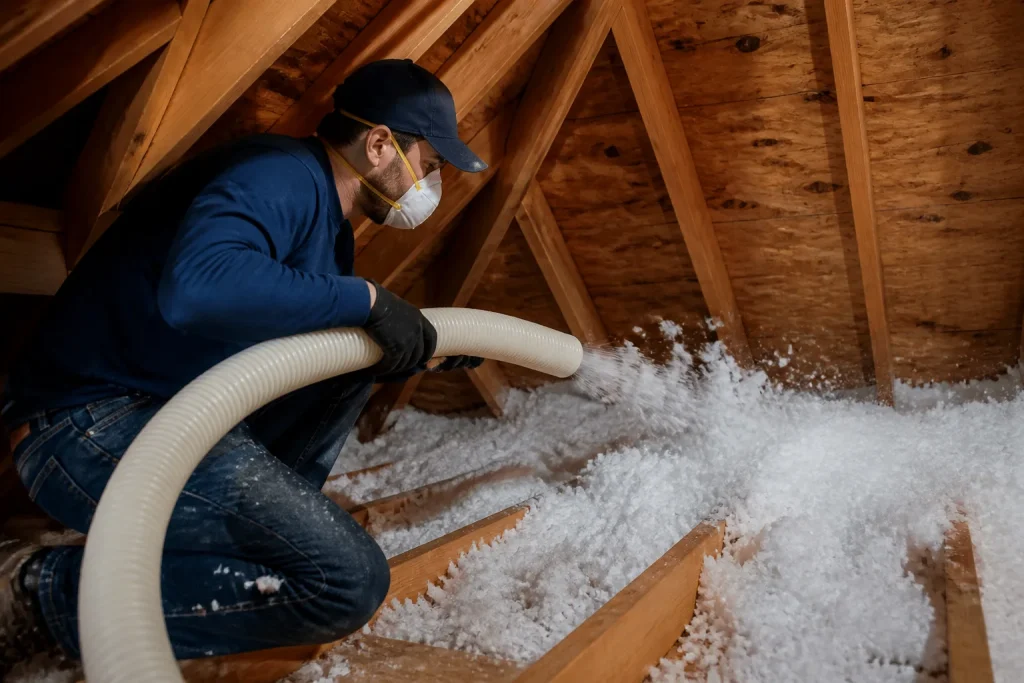
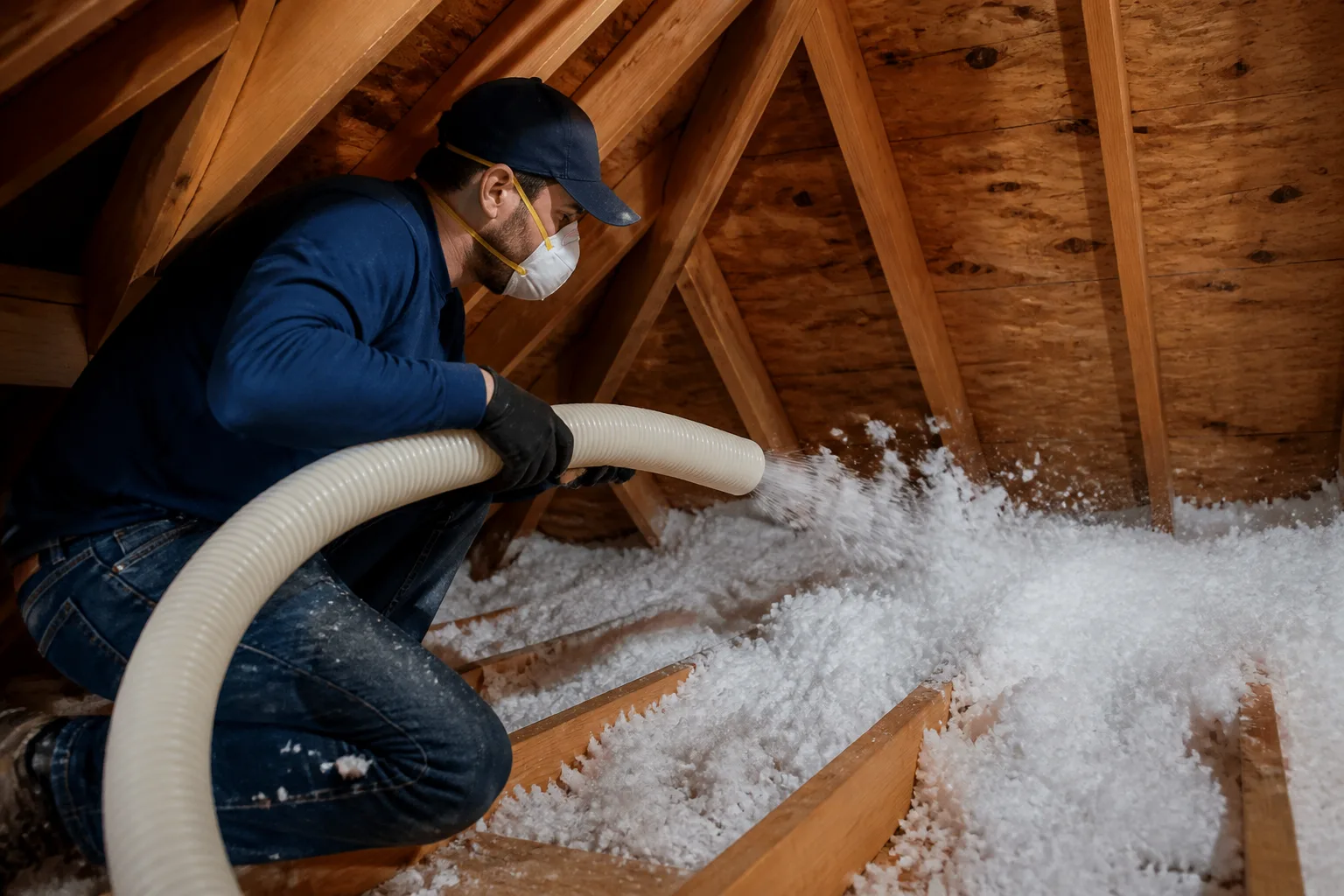
We work across three distinct methods, attic insulation, spray foam, and blown-in, and we stock materials from brands like Johns Manville, Rockwool, and CertainTeed so the recommendation can be based on what’s actually right for the house. Sometimes that’s mineral wool batts where fire resistance matters. Sometimes it’s blown-in fiberglass for an easy top-off over existing material. Sometimes it’s spray foam for a cathedral ceiling or an enclosed rafter bay. The material follows the diagnosis.
If you want to understand more about how these methods compare for Coto De Caza homes specifically, we’ve written about attic insulation in Coto De Caza and also cover spray foam options and blown-in insulation approaches in more detail on those pages.
When to Call a Pro
You’ve checked the HVAC, ventilated what you can, gathered your documentation, and you’re still looking at an upstairs that won’t cool. Or you’ve found moisture, pest damage, or you simply don’t want to climb into a 140-degree attic in August. That’s the moment to call. Not before. Calling with information in hand means the conversation is useful instead of vague.
A good insulation contractor in Coto De Caza should be able to tell you, based on your description and photos, whether this is a “let’s schedule something this week” situation or a “we should have someone out today” situation. They should ask about moisture. They should ask about the age of the home. They should ask whether you’ve noticed rodent activity. If they skip straight to giving you a price over the phone without any of that, keep looking.
This is where the brand-agnostic thing matters more than anywhere else. A contractor who only installs one type of insulation has one answer for every problem. If all you sell is spray foam, then spray foam is what you recommend when someone calls in a panic. That’s not diagnosis. That’s inventory management disguised as expertise. We match the material to the problem.
The Maple Insulation Co approach has always been to look at the attic first, identify what’s actually happening, and then recommend from an eight-brand material roster across fiberglass, mineral wool, open-cell and closed-cell spray foam, and cellulose. That’s not a sales line. It’s how you avoid installing the wrong thing in someone’s house because it happened to be on the truck.
The Bottom Line
Most “emergency” attic insulation situations in Coto De Caza are not emergencies. They’re chronic problems that became impossible to ignore on a hot night. The first 24 hours should go to diagnosis, not purchase: check the HVAC, check for moisture, document what you’re seeing, and don’t let anyone pressure you into same-day installation without an attic walkthrough. The exceptions are water intrusion, fire events, and pest contamination, and those do warrant immediate professional attention because of health and safety issues, not because insulation is urgent.
If you’re in Coto De Caza and need help, Maple Insulation Co offers free estimates. Bring your photos, your questions, and your utility bill history. We’ll help you figure out what’s actually going on. Call (855) 341-6045.
Frequently Asked Questions
How do I know if my attic insulation is actually the problem?
The most reliable signal is a ceiling that’s warm to the touch when the attic above it is hot. If the upstairs is hot but the ceiling feels room-temperature, the problem is more likely HVAC airflow or solar gain through windows. If the ceiling itself radiates heat, insulation or air sealing is the likely culprit. Call (855) 341-6045 for a free assessment if you’re not sure.
Can insulation be an actual emergency?
Insulation itself rarely is, but the conditions that affect it can be. Water-soaked insulation from a roof leak, fire-damaged insulation, or insulation contaminated by rodent waste all warrant same-day professional evaluation because of mold, structural, and respiratory health risks. For straightforward heat transfer problems, you have time to make a good decision.
Is it cheaper to add insulation or replace what’s already there?
In most Coto De Caza homes, topping off existing insulation that’s in decent shape is significantly cheaper than full removal and replacement. However, if the existing material is compressed, wet, pest-contaminated, or contains old, degraded batts, adding more on top won’t solve the problem and removal may be the honest answer. A proper attic inspection determines which path makes sense.
What does attic insulation actually cost in Coto De Caza?
Costs vary based on attic size, access, whether air sealing is included, and the material chosen. Blown-in fiberglass typically runs less than spray foam, while mineral wool batts sit somewhere in between depending on thickness. Without seeing the attic, any specific number is a guess. Estimates are free, so it costs nothing to get a real number. Call (855) 341-6045 to schedule one.
Written by the team at Maple Insulation Co, serving Coto De Caza since 2017.
Need Insulation Help?
Call Maple Insulation Co — licensed & insured, here with fast after-hours help in Coto De Caza.
(855) 341-6045