
Icynene Attic Insulation in Coto De Caza: A Homeowner’s Guide
Icynene spray foam is often pitched as the best insulation money can buy. In some Coto De Caza attics, that’s absolutely true – especially homes with vaulted ceilings, complex rooflines, or HVAC equipment sitting in unconditioned space. But in other attics, it’s a three-times-premium solution that a well-installed blown-in system would match for a fraction of the cost. Here’s how to tell which attic you have.
If you’d rather skip the research and get a straight answer for your specific house, call (855) 341-6045 and we’ll walk you through it. Estimates are free.
What Icynene Actually Is (And What Makes It Different)
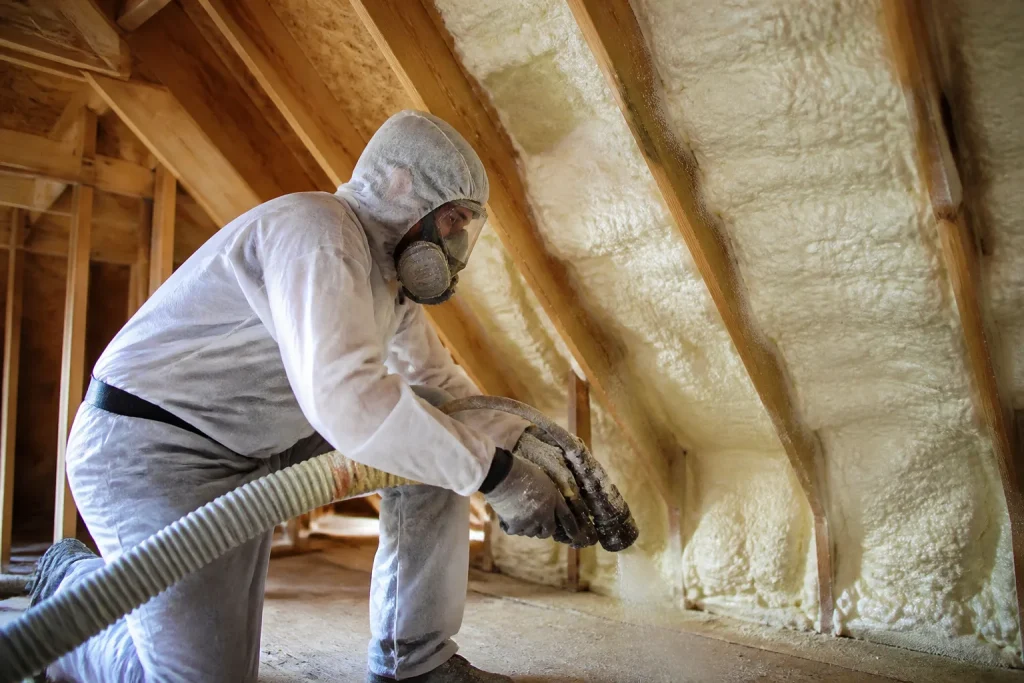
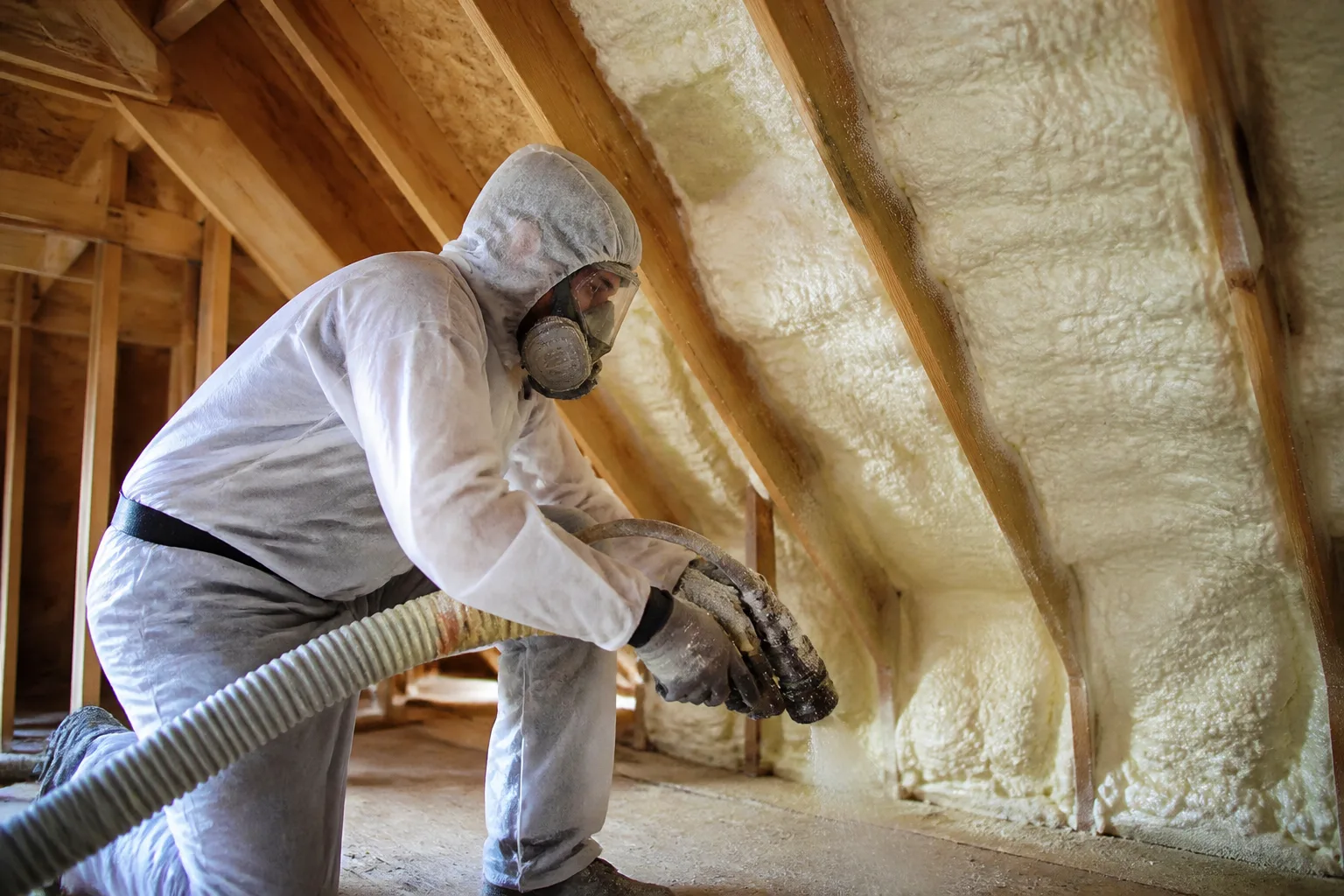
Icynene is a brand of spray polyurethane foam (SPF), and in residential attics it’s almost always the open-cell formulation. Open-cell foam has a softer, sponge-like structure: the cells in the foam are not fully closed, so air and moisture vapor can move through it slowly. It typically delivers around R-3.5 to R-3.7 per inch. Closed-cell foam, by contrast, is rigid and dense at roughly R-6.5 per inch, and it blocks both air and moisture almost completely.
That distinction matters more than most sales pitches let on, because Coto De Caza sits in a fairly dry Southern California climate. Closed-cell’s moisture-blocking power is critical in humid Gulf Coast attics. Here, it’s often overkill – and you pay a steep premium for capability you don’t need. Open-cell Icynene air-seals beautifully, insulates well at standard attic depths, and still lets the roof assembly breathe. In our experience that breathing matters in a place where summer attic temps can swing 80 degrees between day and night.
- Open-cell (Icynene): ~R-3.5/in, air-seals, vapor-permeable, soft, lower cost
- Closed-cell: ~R-6.5/in, air and vapor barrier, rigid, structural, higher cost
- Blown-in fiberglass/cellulose: ~R-2.2 – 3.8/in, no air seal, lowest cost
When Icynene Earns Its Cost in Coto De Caza
There are specific attic configurations in this area where we genuinely recommend Icynene open-cell foam, and it’s not because we make more money on it. It’s because the geometry or the mechanicals make air-sealing the dominant problem.
First: unvented conditioned attics. If you’re converting attic space, or if your HVAC equipment and ductwork live in the attic rather than a closet or crawlspace, sealing the roofline with spray foam keeps the conditioned air inside the thermal envelope instead of leaking through a vented roof. That’s the single biggest energy win Icynene delivers in Coto De Caza, where summer cooling loads drive most utility bills.
Second: complex cathedral ceilings and vaulted spaces. Traditional batts or blown-in insulation struggle in sloped, irregular cavities because they leave gaps at the edges. Open-cell foam expands to fill the entire cavity, adhering to the sheathing. In a large great room with a vaulted ceiling, that difference shows up immediately in room-to-room temperature consistency.
Third: attics over attached garages or bonus rooms where air leakage through the ceiling plane is the reason those rooms are always 10 degrees off from the rest of the house. Foam stops that stack effect cold.
When Icynene Is the Wrong Call
Here’s the honest part. If you have a vented attic – the standard setup with soffit and ridge vents – and your primary issue is simply not enough insulation up there, Icynene is usually a waste of money. A properly dense-packed blown-in system, whether fiberglass from Owens Corning or GreenFiber cellulose, will hit the same R-value at a third to half the installed cost per square foot.
Why? Because in a vented attic, the attic floor is your thermal boundary. Air-sealing that boundary matters, yes – but air-sealing can be done with caulk, foam board, and can foam at the penetrations for a few hundred dollars. Once that’s handled, blown-in insulation performs exceptionally well. The premium you pay for Icynene is for the air-sealing as a continuous layer, which only matters when the roofline itself is the boundary.
We pulled open-cell foam out of a garage attic over in the Forest neighborhood last year where the previous contractor had sprayed the underside of a ventilated roof deck. The homeowner was paying premium price for a system that was fighting its own roof vents. A dense-pack cellulose job at R-38 solved it for less than half what the original install had cost.
What a Proper Icynene Installation in Coto De Caza Should Include
If you do go the Icynene route – whether for a conditioned attic, a vaulted ceiling, or targeted air-sealing – there are specific things to verify when the crew finishes. The installation quality is the difference between a high-performance envelope and an expensive foam blob.
- Depth and consistency: For open-cell in Southern California, you typically want 5 – 6 inches to hit R-20 in attics. Surface should be uniform, no visibly thin spots or bare sheathing.
- Full cavity fill on cathedral ceilings: Foam should contact the sheathing at every point. Gaps at the edges of rafter bays mean thermal bypass.
- Clean edges at transition points: Where foam meets framing, soffits, or other materials, the line should be deliberate – not over-spray sealing vents or gaping at corners.
- Ventilation remains clear: Soffit vents, if it’s a ventilated assembly, must be protected with baffles before spraying. This is a step that gets skipped more often than any other.
- Safe re-entry timing: Icynene off-gasses during curing. Proper installers will advise a 24-hour re-entry window, sometimes less depending on the formulation and conditions.
We’ll walk any homeowner through this checklist, whether or not we did the install. If a crew can’t answer basic questions about depth per inch or air-sealing protocol, that tells you something.
What This Means for Your Coto De Caza Home
So let’s bottom-line it. In Coto De Caza, homes that benefit most from Icynene are ones with a conditioned attic strategy, vaulted or cathedral geometry, or serious air-leak pathways in spaces where the roofline is inside the conditioned envelope. That’s a real but specific set of attics. Good candidates are older custom builds on the golf course side where rooflines get complex, and newer builds that enclosed attic space without a full HVAC redesign.
For everyone else – the standard single-story with a vented attic and an under-insulated ceiling – a properly dense-packed blown-in system using Owens Corning fiberglass or GreenFiber cellulose is the smart money. You can see our breakdown of that approach in our Blown In Insulation in Coto De Caza guide.
The right insulation depends on your attic, your climate zone, and your goals. We match the material to the problem, not to what we happen to stock most – and that’s the entire reason we carry eight brands across Maple Insulation Co home. For a deeper look at how spray foam works across different attic designs, see our Spray Foam Insulation in Coto De Caza page.
The Bottom Line
Icynene open-cell spray foam is a premium product that solves a premium problem: air leakage through the roofline. It delivers excellent results in Coto De Caza when the attic is part of the conditioned space, when vaulted ceilings make traditional insulation unreliable, or when HVAC equipment lives in the attic.
What it doesn’t do is make sense as a default upgrade in a standard vented attic where the only issue is insufficient R-value. In those attics, a proper air-seal-and-blow job with fiberglass or cellulose hits the same performance numbers at significantly lower cost.
If you’re in Coto De Caza and want a straight answer on which approach fits your home, Attic Insulation in Coto De Caza is our detailed service guide for this area. Or just call us – (855) 341-6045 – and we’ll talk it through. The recommendation should fit the house, not the inventory.
Frequently Asked Questions
Icynene open-cell foam in Coto De Caza typically runs $1.75 – $2.50 per board foot installed, which means a full attic roofline can run $8,000 – $15,000 depending on square footage and access. This compares to $1,500 – $4,000 for a full blown-in attic insulation job at comparable R-value. The cost makes sense when air-sealing the roofline is the goal, not when you’re simply under-insulated. Call (855) 341-6045 for an exact quote – estimates are free.
For Coto De Caza’s dry climate, open-cell Icynene is typically the better value. Closed-cell’s additional R-value per inch and its vapor-barrier function solve humidity and structural problems we don’t often see here. Icynene open-cell costs roughly 40 – 50% less than closed-cell for the same cavity, and it allows the roof assembly to dry, which matters even in Southern California when winter condensation forms on the underside of roof sheathing.
Most installers advise a 24-hour re-entry window after open-cell foam is sprayed, as the foam off-gasses during curing. Plan to spend the night elsewhere and keep windows open on return. If anyone in your home has respiratory sensitivities, we’d extend that to 48 hours and discuss this with the crew before the job begins.
Only if your attic is leaking conditioned air through the roofline – meaning you have a conditioned attic, vaulted ceilings, or ductwork and air handlers sitting in the attic. If your home has a standard vented attic and the ceiling plane is the issue, a proper air-seal plus blown-in insulation job will lower your Coto De Caza cooling bills just as effectively at a third the price. The utility bill doesn’t care what brand is in the attic. It cares about R-value and air leakage.
Written by the team at Maple Insulation Co, serving Coto De Caza since 2017.
Need Insulation Help?
Call Maple Insulation Co — licensed & insured, here with fast after-hours help in Coto De Caza.
(855) 341-6045