
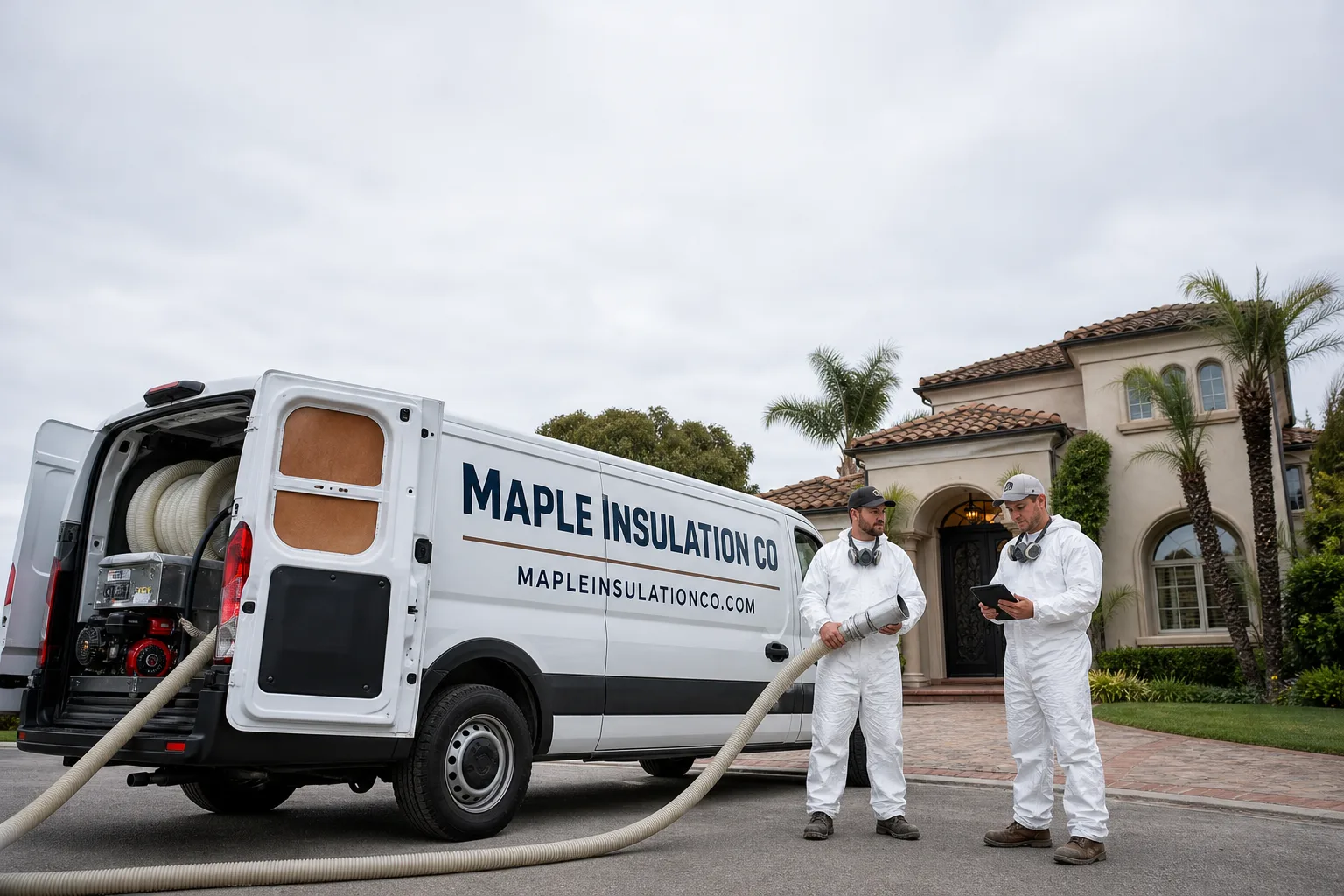
Fast, Reliable Attic Insulation Across La Palma
Attic insulation in La Palma is a tract-home problem with a tract-home solution. Most of the city’s houses were built in two tight windows, the late 1960s through early 1970s and the mid-1980s, which means original fiberglass batts are now 35 to 55 years old, compressed, sagging, and running at a fraction of their rated R-value. We work on these exact floor plans every week and know what a Walker Street attic looks like before we even climb the ladder. If your cooling bills climb every August and your upstairs rooms never match the thermostat, call us at (855) 341-6045. We’ll give you a straight answer and a free estimate.
Why Maple Insulation Co Is La Palma’s Preferred Attic Insulation Company
Maple Insulation Co works across every major insulation category. We don’t push one product line. We stock Owens Corning fiberglass, Johns Manville batts, Knauf rolls, and GreenFiber cellulose, so the recommendation matches your attic and your goals, not our inventory. When a La Palma homeowner asks about Attic Insulation, we start with what’s actually in their attic now, because half the time it’s original builder-grade material that was under-spec’d even in 1969.
Our crews are in La Palma regularly. We know the tract layouts off La Palma Avenue and the newer subdivisions near the commercial corridors. We know which streets have the worst radiant-barrier tears and which 1980s homes have soffit venting that never should have passed inspection. That local repetition means faster diagnosing and fewer surprises once we open the scuttle hole. Noel Castaneda runs every job with the same expectation: the recommendation has to hold up when the homeowner compares it to what their neighbor paid.
We handle the three primary residential methods in-house: blown-in, spray foam, and batts. That matters because a La Palma retrofit often needs more than one approach. A 1970s attic with compressed batts might need full removal, air sealing, and blown-in cellulose. A 1980s attic with a heat problem might only need a radiant barrier and a top-up. Eight brands, three methods, one contractor.
Attic Cleaning Services in La Palma
Attic Cleaning Services in La Palma usually mean one thing: decades of dust, rodent droppings, and broken-down insulation fibers sitting above your ceiling. In the original tracts off Walker Street, we routinely find thirty-year accumulation of dust, old roofing debris, and the crumbled remains of foil radiant barriers. Before any new insulation goes in, that layer has to come out. A typical attic cleaning in La Palma runs $400 to $900 depending on attic size and how much debris is up there.
What Cleaning Actually Involves
We vacuum out old insulation and debris, remove any damaged material, and expose the ceiling joists and top plates. We also check for pest entry points and seal obvious gaps. Cleaning first means the new insulation sits against a clean deck, not a layer of dust that blocks adhesion and traps moisture.
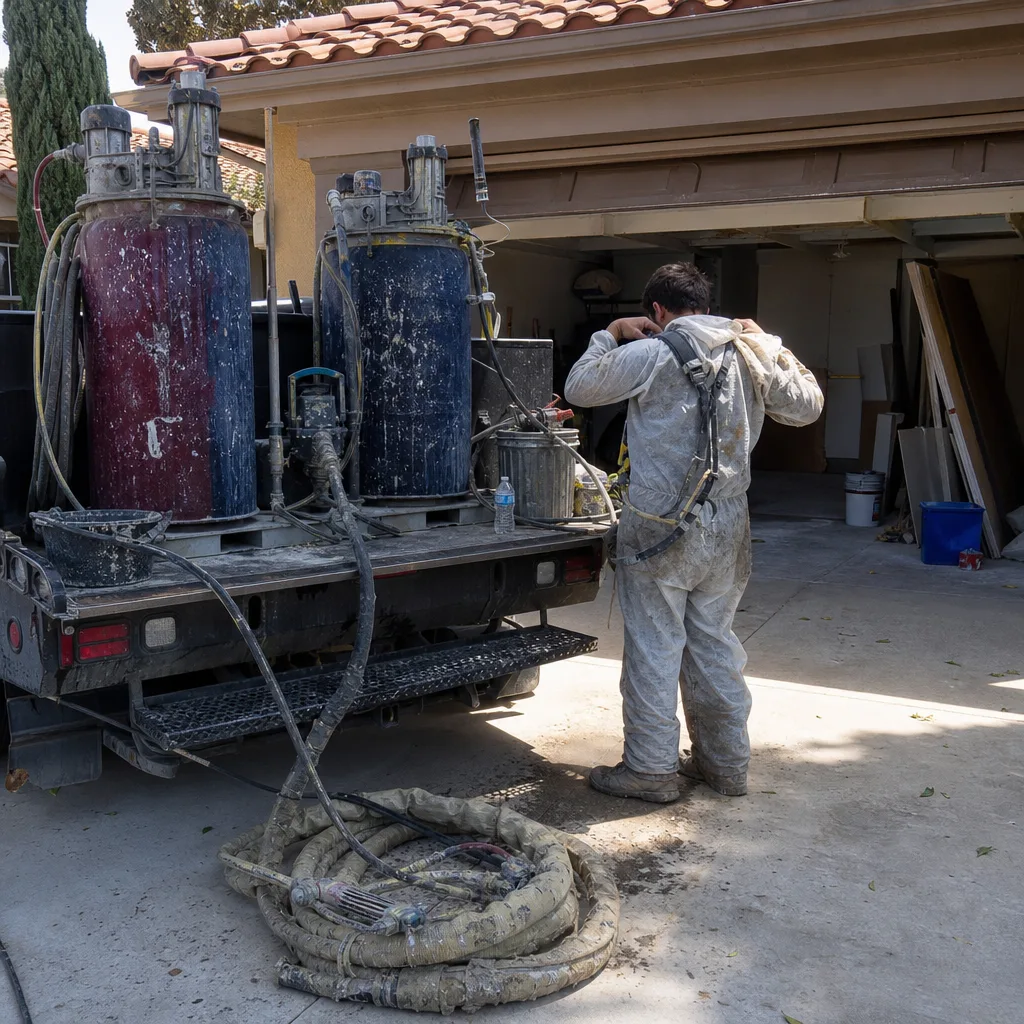
When La Palma Homes Need It
If your attic has never been cleaned and the insulation is original, it’s overdue. Rodent activity is common in older tracts, and droppings inside insulation are a health and odor issue. We clean before any insulation replacement, and we also do standalone cleanings for homeowners preparing to sell.
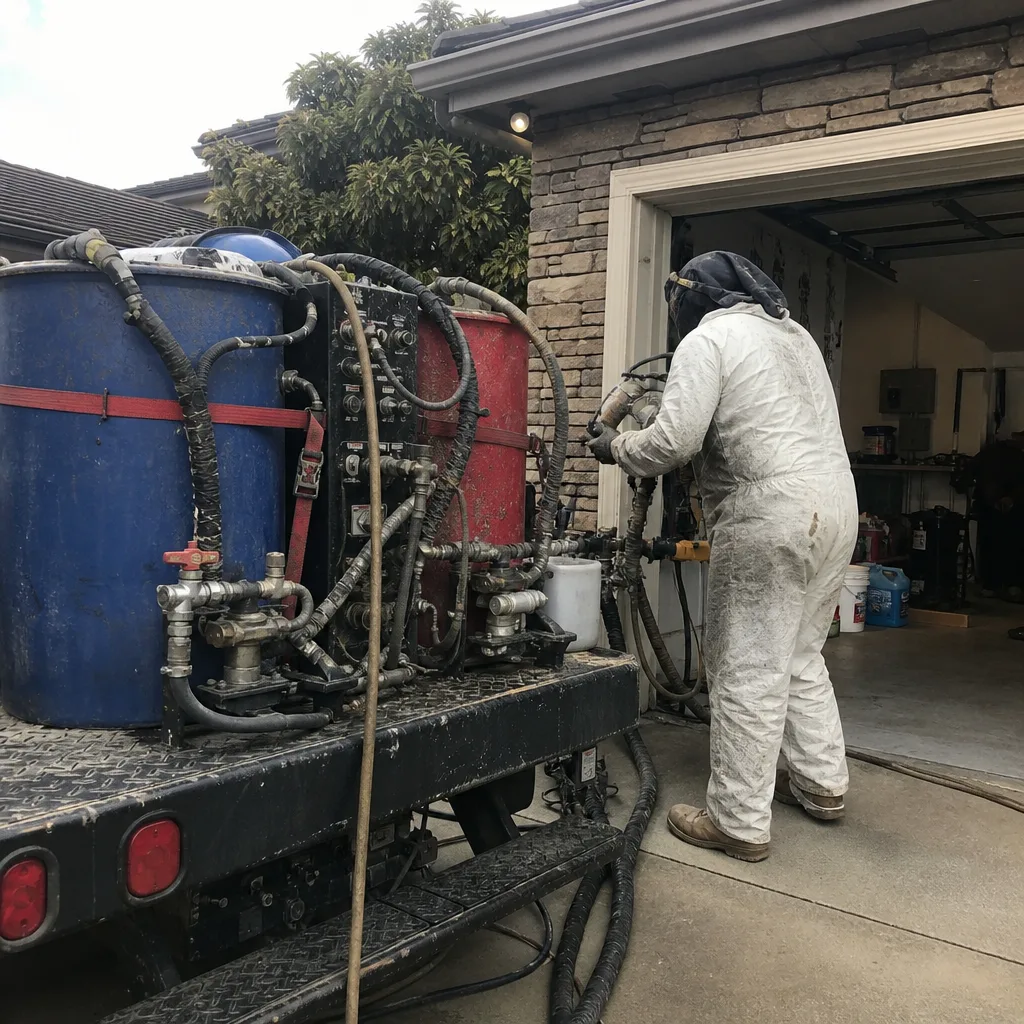
What happens when you call
- 1
A real person answersNo phone trees — you reach a local pro.
- 2
You get an upfront price rangeHonest numbers before anyone is dispatched.
- 3
A background-checked tech heads outLicensed & insured, dispatched right away.
- 4
You approve before work beginsNothing starts until you say go.
Attic Mold Removal in La Palma
Attic Mold Removal in La Palma is often tied to the marine layer. Morning fog rolls in off the coast, and in 1960s and 1980s attics with undersized soffit vents, that moisture gets trapped against the roof deck. Add torn radiant barriers holding damp air against the sheathing and you get mold colonies on the north-facing roof planes. Mold removal in a typical La Palma attic runs $600 to $1,400, depending on square footage and how far the growth has spread.
What We Treat and How
First we address the moisture source, because killing mold without fixing ventilation means it returns within two seasons. We remove affected insulation, treat the framing and sheathing with an EPA-registered antimicrobial, and replace or upgrade the venting. Then we install new insulation only after the attic is dry and verified.
Signs in La Palma Tract Homes
Dark staining on roof sheathing, a musty smell in the hallway near the attic access, and elevated indoor humidity in summer are the classic signals. If you see mold on the attic side of your ceiling drywall, it’s already been growing for a while. We inspect and treat without upselling; if it’s minor surface mold, we’ll tell you that too.
Trusted Brands We Service in La Palma
We work with Owens Corning, Johns Manville, Knauf, and GreenFiber, among others. For La Palma customers that means we can match the exact product to the job: blown-in fiberglass from Owens Corning for a fast full-attic retrofit, GreenFiber cellulose for homeowners who want recycled content, and Johns Manville or Knauf batts where the existing cavity sizing makes batts the cleaner fit. We stock local parts and materials for La Palma jobs, so turnaround is measured in days, not weeks. If a specific brand matters to you, say so; we’ll quote it directly.
Common Attic Insulation Problems We See in La Palma Homes
- Compressed builder-grade batts running at R-8 or less. Original fiberglass from the late 1960s and early 1970s has settled and compacted. We find three inches where code now calls for R-38, and the heat pours right through.
- Torn and dust-covered foil radiant barriers. The foil facing on 1970s batts tears at the joists and collects dust. Once the reflective surface is dirty, it stops reflecting heat and starts trapping moisture against the roof deck.
- Undersized soffit vents in 1980s subdivisions. Many mid-1980s La Palma homes have venting that was marginal when built and is now partially blocked. Hot, humid attic air degrades new insulation faster than it should.
- Leaky recessed can lights and top plates. Older can fixtures are unsealed, letting conditioned air escape into the attic and pulling attic heat into the house. Air sealing is the step skipped by most retrofit jobs, and it’s the one that makes the biggest difference.
Pricing for Attic Insulation in La Palma, CA
Attic insulation in La Palma runs on predictable ranges because the housing stock is so consistent. An insulation top-up over existing batts typically costs $1,200 to $2,400 for a standard 1,300-square-foot tract home. Full removal, cleaning, air sealing, and new blown-in insulation runs $2,800 to $5,500. Attic cleaning alone is $400 to $900, and attic mold removal runs $600 to $1,400. What moves the number: attic size, access difficulty, how much debris needs removal, and whether we’re adding baffles or re-venting. Call (855) 341-6045 for a free estimate. We give you the number before we start, not after.
We Also Serve Cities Near La Palma
Our crews cover the surrounding area as well. We regularly handle attic insulation jobs in Cerritos, Cypress, Buena Park, and Hawaiian Gardens. If you’re in a neighboring city and want the same local-level attention, read more about Attic Insulation in La Palma or call us directly. We’ll tell you straight whether we’re the right fit for your home.
Serving La Palma, CA — Our Local Coverage Area
We’re based in the La Palma area and know this community well. Use the map below to see our service coverage — if you’re nearby, we can almost certainly help.
FAQs About Attic Insulation in La Palma
Because those homes were built in the late 1960s and early 1970s with fiberglass batts that have compressed and sagged over five decades. The original material loses loft, drops away from the ceiling line, and creates convective loops that let attic heat travel into living spaces. We find R-8 or less in roughly one out of every three or four homes on those streets.
Yes. The marine layer brings morning moisture that settles in attics, particularly where soffit venting is undersized, while Santa Ana wind events drive sharp temperature swings. Insulation that has absorbed moisture or lost its reflective facing performs worse under both conditions. A properly vented, air-sealed attic handles La Palma’s climate swings without degrading the new insulation.
If your home has the original 1970s foil-faced barrier, it’s already past its useful life. Torn foil at the joists and dust buildup kill reflectivity within 20 to 30 years. If you can see tears or heavy dust when you look up from the scuttle hole, replace it during your next insulation upgrade. Call (855) 341-6045 and we’ll tell you what’s salvageable.
La Palma sits in California climate zone 6 under DOE guidance, where R-38 attics are standard for existing homes and R-49 is recommended for new construction. We install blown-in fiberglass or cellulose to R-38 on most La Palma retrofits, and we can go higher if you’re replacing everything and want maximum cooling-season performance.
Yes, and we do it as a single job. We remove the old insulation, treat any mold with an antimicrobial that’s safe for occupied homes, fix the ventilation or air-sealing issue that caused the moisture problem, and then install fresh insulation. That sequence is essential. Installing new insulation over mold or over a moisture problem just ruins the new material. Estimates are free, so call (855) 341-6045.
Written by Noel Castaneda, Owner at Maple Insulation Co, serving La Palma and surrounding Orange County communities.